



What is a cable gland and what is it used for? | WKK
Posted on 1 September 2025
What does a cable gland do?
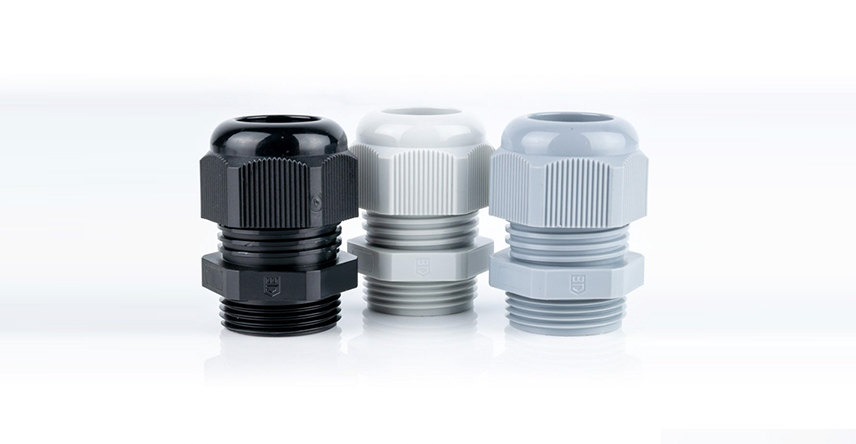
A cable gland ensures safe guidance of a cable through a wall. The cable gland ensures that the cable does not touch the walls, and additionally provides strain relief. This keeps the cable connected to the endpoint when tensile force is applied to the cable.
Additionally, a cable gland provides a dust-tight and moisture-tight seal, so that no dust or moisture can enter along the cable through the wall.
What is a cable gland used for?
A cable gland is used to guarantee a complete seal where cables are led through a wall. Additionally, they provide strain relief (when tensile force is applied to the cable, the cable gland absorbs this) and prevent the cable from touching the walls of whatever the cable is being fed into.
When do you use a cable gland?
You use a cable gland when you lead a cable through a wall, and it is important that the cable and the installation or cable box that the cable is fed into are protected.
What are cable glands intended for?
Cable glands are intended for one application (guiding a cable where it enters, for example, a cable box), but offer several advantages:
- When force is applied to the cable, this force is transferred to the cable gland, instead of to the cable and the cable connection. This prevents a cable from coming loose from the installation.
- The cable gland prevents moisture or dust from entering through the hole where the cable is fed through. When a cable gland is used to feed a cable into a cable box, the cable gland ensures that no dust and/or moisture can enter the cable box via the hole through which the cable enters the cable box.
What is the cable gland of a cable?
The cable gland is not part of a cable. A cable gland is a type of cable entry that ensures the cable safely enters a wall, cable box, or system. The cable gland is therefore a separate item, not a part of the cable.
Is a cable gland waterproof?
Cable glands offer varying degrees of resistance against moisture. We offer cable glands with one of two protection ratings: IP66 and IP68. The first number indicates the degree of 'protection against contact / penetrating objects'. The '6' means that these cable glands are dust-free.
The second number indicates the degree of protection against moisture. Our plastic Ex cable glands have a protection rating of '6'. This means that the cable gland is water-resistant. The rest of our cable glands have a protection rating of '8'. This means that the cable glands are waterproof.
How does a cable gland nut work?
A cable gland locknut is used to secure a cable gland to the wall of, for example, a cable box. The cable gland is placed on one side in, for example, a cable box, and the cable gland nut is screwed onto the thread of the cable gland on the other side. By then tightening the cable gland nut, the cable gland is secured.
Tailored advice
Are you unsure whether or not a cable gland is the right solution for your application? Or do you need advice regarding the right cable gland? Contact our advisors. They are at your disposal.
Also have a look at

Visit WKK at Light + Building 2026 in Frankfurt
Visit WKK at Light + Building 2026 in Frankfurt and discover our solutions for cable protection, cable management, and fastening in professional in...

WKK chooses FibreStrap: a sustainable solution
Sustainability isn’t in words. It’s in the choices you make as a company.