
Locknuts
A locknut is a fastening component used in combination with a cable gland to safely route cables or conduits through a wall or enclosure. It provides the necessary pressure to ensure an effective seal, which is crucial for protection against dust, dirt, moisture, or gases. Locknuts are commonly used in electrical installations, industrial systems, and other technical applications.
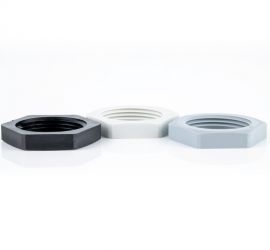
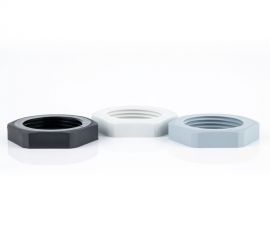
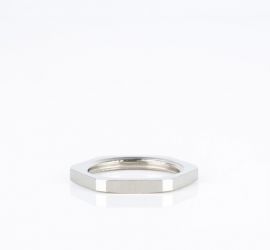
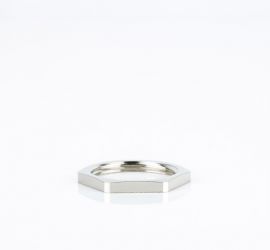
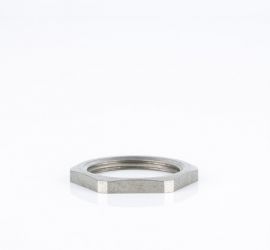
Material types (plastic, brass, stainless steel)
Locknuts are available in various materials. When each material quality is used depends on the application:
Plastic locknuts
Lightweight and corrosion-resistant, suitable for indoor installations and applications where no high mechanical load is expected.
Brass locknuts
Durable and strong, ideal for applications with higher mechanical stress or where a higher degree of corrosion resistance is required.
Stainless steel locknuts
Excellent corrosion resistance, suitable for aggressive environments such as the chemical industry.
Difference between M and PG thread types
There are two commonly used thread types for cable glands: metric (M) and PG (Panzergewinde). Metric glands use a standard metric thread (e.g., M12, M16, M20), mainly used in modern installations and industrial environments. PG glands have a finer, more tapered thread and were originally developed in Germany. They are still often used in older installations or specific applications.
Sizes and standards
Locknuts are available in various sizes depending on the thread size of the gland itself. For example, an M20 locknut fits an M20 gland. The correct size depends on factors such as cable or conduit diameter and the specifications of the installation project. Choosing the right combination ensures a safe and efficient seal.
Applications
Locknuts are used in various situations, such as:
- Connecting electrical wiring in switch cabinets and distribution panels
- Routing conduits through walls or ceilings
- Protecting cables against damage and external influences
- Sealing entries against dust, dirt, and moisture
Importance of correct size and fit
It is essential to choose the correct size and fit of the locknut, as this directly affects the effectiveness of the seal. A locknut that is too large or too small may cause leaks, damage to cables or conduits, or even safety risks. Therefore, it is important to know the specifications of the cables or conduits and the enclosure when selecting a locknut.