
Reducers
A reducer is a connecting component used to adjust the thread size of a cable gland, making it compatible with a different thread size of a cable gland box or other electrical component. This allows cables with different thread sizes to be effectively connected without the need for complete part replacements.
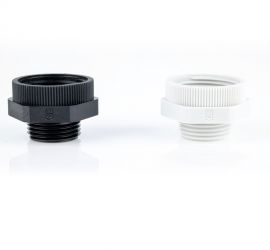
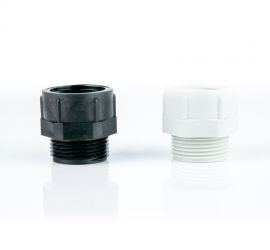
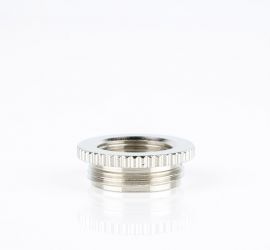
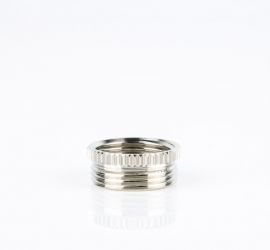
What is a reducer?
A reducer is a ring that allows a gland with a smaller thread to be used for, for example, a connection with a larger thread. The gland is screwed into the top (hexagonal side) with the thread, and then the reducer is screwed into the connection.
How to use a reducer?
To use a reducer, screw the gland into the hexagonal side of the reducer, and then use the gland with the reducer in the connection. Ensure you use a reducer of the correct size—reducers are available in sizes ranging from M16 to M63.
Materials & quality
Our assortment offers reducers in two main materials: plastic and brass. The plastic version is made from polyamide PA6 GF30, ensuring a lightweight yet sturdy connection. These are available in black (RAL 9005) and light grey (RAL 7035). The brass version is made from CuZn39Pb3 brass and has a galvanically nickel-plated finish, providing a durable and corrosion-resistant connection. Both materials are suitable for various industrial applications, depending on the required strength and environmental conditions.
Applications
Reducers are widely used in the electrical industry, particularly for installing cable glands in switch cabinets, distribution panels, and other electrical installations. They are ideal for situations where components with different thread sizes need to be connected, such as connecting a larger threaded cable gland to a smaller threaded gland box. They are also used in environments where space-saving and efficient installation are crucial.
Assembly & installation tips
When installing reducers, it’s important to ensure that the threads are properly aligned to prevent damage. Use suitable tools to tighten the connection securely if necessary, but avoid over-tightening to prevent component damage. After installation, check that the connection is secure and leak-free, especially in applications where water or dust resistance is required. When working with plastic reducers, it’s also important to check for UV resistance depending on sunlight exposure.
Need advice?
If you need personal advice on which type of polyamide 6.6 cable tie is best suited for your application, please contact one of our advisors. They are happy to assist you.