
Yellow crimp terminals
In our assortment, you’ll find a wide range of crimp terminals, available in various types, sizes, and with specific features. This selection includes an extensive range of yellow crimp terminals.
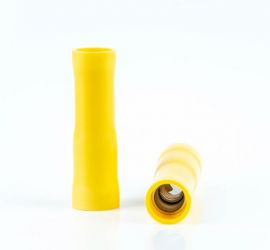
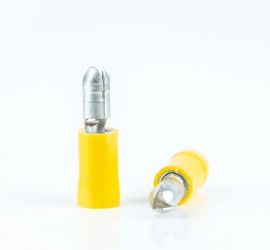
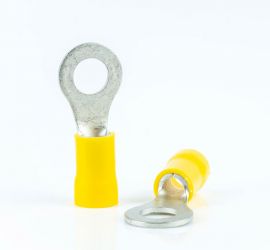
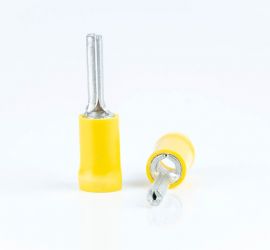
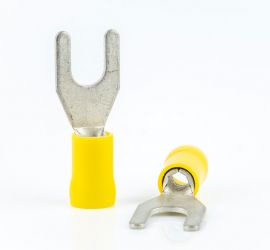
Types of yellow crimp terminals
The following types of crimp terminals are available in yellow:
· Ring terminals
· Spade terminals
· Butt connectors
· Bullet disconnectors – Male
· Bullet disconnectors - Female
· Spade connectors (insulated & fully insulated)
· Piggyback connectors
· Blade connectors
· Pin terminals
Properties of yellow crimp terminals
Yellow crimp terminals have specific characteristics that differentiate them from red and blue terminals. Yellow terminals are suitable for use with cables that have a conductor size between 4 and 6 mm². They correspond to AWG 12 – 10. AWG stands for American Wire Gauge and indicates the thickness of the wires within the cable. The lower the AWG number, the thicker the wire. AWG also helps determine how much electrical current a cable or wire can handle without overheating or burning through.
Using yellow crimp terminals
Attaching a crimp terminal with a crimping tool
To attach a crimp terminal to a cable, use a specialized crimping tool. Attaching an insulated crimp terminal involves the following steps:
1. Strip the cable
Remove approximately 7 mm of the cable insulation using an appropriate cable stripper. Work carefully to avoid damaging the wires or the cable itself. Do not twist the wires together, as this can compromise the connection’s reliability.
2. Insert the crimp terminal
Slide the terminal over the stripped wires. Ensure that all strands are fully inserted into the metal sleeve.
3. Crimp the connection
Use the crimping tool to firmly secure the terminal. The tool will release once the crimp is done correctly and securely.
4. Check the connection
Verify that the terminal is firmly and securely attached to the cable. A proper connection is essential for reliable performance.
Note: Make sure all components are clean before assembly. Use a small brush to clean the conductors if necessary. Remove any metal particles that could cause contact corrosion.