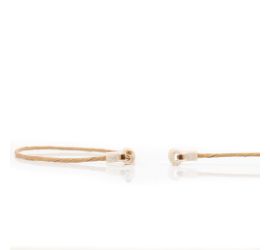
FibreStrap cable ties
FibreStrap is a revolutionary cable tie made from plant-based fibres, developed to offer a sustainable alternative to conventional plastic cable ties. The ecological footprint of FibreStrap is 80% lower than that of plastic cable ties. FibreStrap cable ties are strong, recyclable, and biodegradable.
Properties of FibreStrap
FibreStrap cable ties are made from fibres sourced from Scandinavian forests. They are resistant to 1,000 hours of UV exposure, equivalent to a full year of outdoor use. In addition, they can withstand 336 hours of exposure to temperatures of 75 °C. This corresponds to a shelf life of 2 years at 25 °C, meaning you never have to worry about the durability of your cable ties.
They can be used at temperatures down to −30 °C. FibreStrap cable ties have a tensile strength of 11.2 kilograms and are resistant to (splash) water. They also comply with REACH and RoHS requirements.
FibreStrap cable ties are available in lengths ranging from a minimum of 200 mm to a maximum of 780 mm.
A sustainable choice
By using natural materials, FibreStrap offers a sustainable alternative to plastic cable ties. Compared to a 200 mm cable tie made from polyamide 6.6, the production of a FibreStrap cable tie results in 85% less CO₂ emissions and uses 80% less water.
When the cable tie is no longer needed, it can be disposed of with waste paper. If a FibreStrap cable tie ends up in nature or in a landfill, it will decompose relatively quickly due to its biodegradable properties.
The advantages of FibreStrap
Plant-based and renewable – Made from sustainably sourced Scandinavian wood fibres.
Recyclable and biodegradable – Often recyclable together with paper and capable of decomposing within a reasonable time frame, for example in landfills.
Strong and reliable – Tested according to standard requirements for plastic cable ties, with tensile strengths up to approximately 110 N, in accordance with IEC 62275:5:2018.
Versatile applications – Replaces plastic cable ties in packaging, logistics, production, and more.
No sharp edges – Safer for hands and products.
Small ecological footprint – Up to 80% lower water and energy consumption during production compared to plastic alternatives.